Introduction
The word fascisterne often sparks strong emotions—fear, anger, curiosity, or confusion. It refers to people and movements shaped by fascism, an ideology that left a deep scar on modern history and still echoes in political debates today. Understanding fascisterne is not about reopening old wounds for their own sake. It’s about learning how power, identity, and fear can combine to reshape societies, sometimes with devastating consequences. In this article, you’ll learn where fascisterne came from, what they believed, how they ruled, and why their legacy still matters in the modern world.
By the end, you’ll have a clear, grounded understanding of fascisterne—not as a vague insult or historical cliché, but as a real phenomenon with specific ideas, structures, and outcomes that continue to influence global conversations.
What Does “Fascisterne” Mean?
At its core, fascisterne is a Scandinavian and Danish term meaning “the fascists.” It refers to individuals or groups who supported or embodied fascist ideology, especially during the early to mid-20th century. Fascisterne were not simply authoritarian leaders; they were part of broader social movements that promised national rebirth, order, and unity during times of crisis.
Fascism emerged as a reaction to rapid social change. Economic collapse, political instability, and cultural anxiety created fertile ground for movements that claimed democracy was weak and pluralism was dangerous. Fascisterne presented themselves as strong, decisive, and uncompromising—qualities that appealed to populations exhausted by uncertainty.
Importantly, fascisterne were not identical everywhere. While they shared core beliefs, their methods and priorities varied by country, culture, and historical moment.
The Historical Roots of Fascisterne
Post–World War I Europe
The rise of fascisterne cannot be separated from the chaos following World War I. Large parts of Europe faced ruined economies, wounded national pride, and fractured political systems. Many people felt betrayed by traditional elites and disillusioned with parliamentary politics.
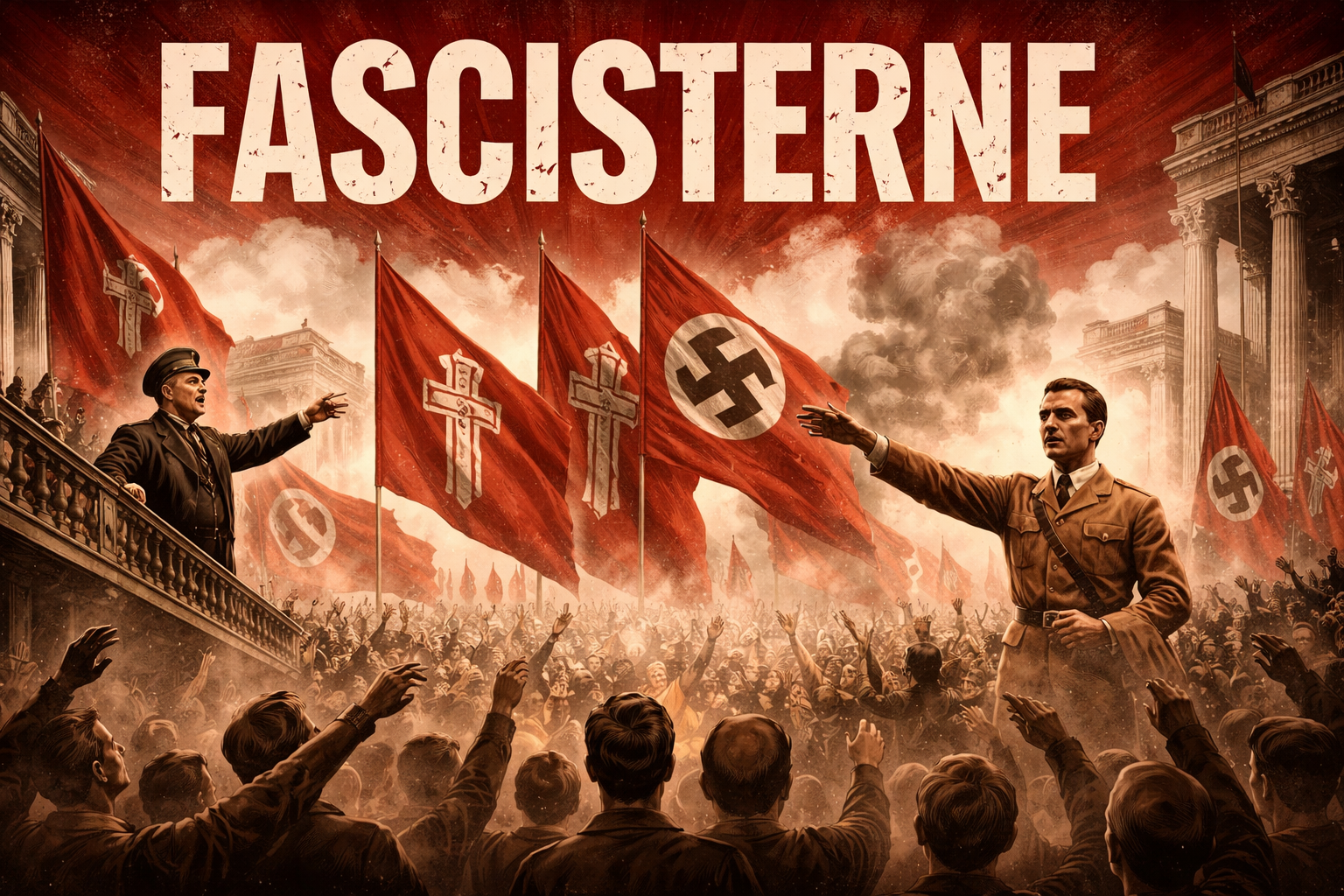
In this atmosphere, fascisterne argued that liberal democracy had failed. They claimed that only a strong, unified state—led by a powerful figure—could restore national greatness. Their message was simple, emotional, and often delivered through mass rallies, symbols, and slogans that made people feel part of something larger than themselves.
Italy and Germany became the most famous examples, but similar movements appeared across Europe, each shaped by local grievances and ambitions.
Key Figures Behind Fascist Movements
Two names are inseparable from the global understanding of fascisterne: Benito Mussolini and Adolf Hitler. Mussolini’s movement in Italy laid the groundwork, while Hitler’s regime in Germany pushed fascist ideas to genocidal extremes.
Though their paths differed, both leaders used fear, propaganda, and promises of renewal to consolidate power. Fascisterne rallied around them not only because of ideology, but because they symbolized strength in moments of perceived national humiliation.
Core Beliefs and Values of Fascisterne
Absolute Loyalty to the Nation
For fascisterne, the nation was sacred. Individual rights mattered only insofar as they served national strength. Personal freedom, dissent, and diversity were often portrayed as threats rather than virtues.
This intense nationalism was emotional rather than rational. It relied on myths of a glorious past and visions of a purified future. Anyone who didn’t fit the ideal—ethnic minorities, political opponents, or cultural “outsiders”—could be labeled enemies.
Authority, Hierarchy, and Control
Fascisterne rejected the idea that all people are equal in political life. Instead, they embraced hierarchy. A strong leader stood at the top, followed by loyal elites and obedient citizens. Decision-making flowed downward, not upward.
This belief justified censorship, surveillance, and violence. Fascisterne argued that repression was not cruelty but necessity. Order, they claimed, required sacrifice.
Fascisterne in Power: How They Governed
Political Structure and Daily Life
Once in control, fascisterne transformed the state into an extension of their ideology. Independent institutions—courts, media, unions—were either absorbed or destroyed. Political opposition became illegal or dangerous.
Daily life changed subtly at first, then dramatically. Symbols appeared everywhere. Education focused on loyalty. Art and culture were reshaped to glorify strength, tradition, and obedience. Over time, people learned that silence was often safer than speech.
Propaganda as a Tool of Unity
Propaganda was not just messaging; it was an environment. Fascisterne understood that repetition shapes reality. Newspapers, radio, posters, and public events reinforced the same themes until they felt natural.
A striking example is the use of massive rallies to create emotional bonding. Standing among thousands, hearing the same chants, individuals felt powerful and protected—yet also controlled.
How Fascisterne Differed from Other Ideologies
The confusion between fascism, socialism, and communism is common, but the differences matter. Fascisterne opposed class equality and internationalism, favoring national unity over social justice.
Ideological Comparison Table
| Aspect | Fascisterne | Liberal Democracy | Communism |
|---|---|---|---|
| View of the State | Absolute authority | Limited by law | Total control |
| Individual Rights | Subordinate to nation | Central | Subordinate to class |
| Economic Model | State-guided capitalism | Market-based | State-owned |
| Attitude to Dissent | Suppressed | Protected | Suppressed |
This comparison shows why fascisterne often clashed with both democratic and left-wing movements, even when tactics appeared similar on the surface.
Fascisterne Beyond Italy and Germany
Although Italy and Germany dominate discussions, fascisterne appeared elsewhere too. Spain, Hungary, Romania, and even non-European regions experienced fascist-inspired movements. Each adapted the ideology to local traditions, religions, and social tensions.
In Scandinavia, fascisterne never gained the same power, but they influenced political discourse. Studying these smaller movements helps explain how fascist ideas spread and why they sometimes failed.
Failure often came from strong institutions, economic stability, or cultural resistance—factors that limited the appeal of extreme solutions.
The Moral and Human Cost
Violence and Exclusion
The most devastating legacy of fascisterne is human suffering. Political repression, war, and genocide were not accidents; they were outcomes of an ideology that valued purity over humanity.
The Holocaust stands as the most extreme example, but countless others suffered imprisonment, exile, or death simply for being different or dissenting.
Long-Term Trauma
Even after fascist regimes fell, societies struggled to heal. Trust in institutions eroded. Families carried silence and shame across generations. Understanding fascisterne today means acknowledging this long shadow.
Fascisterne in Modern Language and Debate
Today, the term fascisterne is sometimes used loosely, even casually. That can be risky. When every strong opinion is labeled fascist, the word loses meaning—and history loses clarity.
At the same time, genuine authoritarian tendencies still exist. Learning the real traits of fascisterne helps distinguish serious threats from heated rhetoric. History becomes a tool, not a weapon.
Why Understanding Fascisterne Still Matters
Fascisterne did not arise because people were evil. They arose because people were afraid, angry, and searching for certainty. That’s the uncomfortable truth.
Economic anxiety, cultural change, and political polarization are not unique to the past. Studying fascisterne offers a mirror. It asks difficult questions about how societies respond to crisis—and what they’re willing to sacrifice for the promise of order.
Conclusion
Fascisterne represent more than a chapter in history; they are a warning written in human experience. From their rise in postwar chaos to their rule through fear and spectacle, fascisterne show how fragile democratic values can be when fear outweighs trust. Understanding their beliefs, methods, and consequences equips us to recognize similar patterns before they take root again.
The key takeaway is simple but powerful: strong societies are built on critical thinking, empathy, and accountability—not blind loyalty or enforced unity. Learning about fascisterne is not about dwelling on darkness; it’s about protecting the future with the lessons of the past.
Frequently Asked Questions (FAQs)
What does the term fascisterne specifically refer to?
Fascisterne refers to people or groups who supported fascist ideology, especially in 20th-century Europe. It emphasizes followers, not just leaders.
Are fascisterne the same as Nazis?
Not exactly. Nazis were a specific German fascist movement. Fascisterne include a broader range of groups with similar core beliefs.
Why did fascisterne gain popular support?
They rose during crises. Economic hardship, political instability, and national humiliation made their promises of order appealing.
Do fascisterne exist today?
Organized fascist states no longer exist, but some groups and ideas echo fascist themes in modern politics and culture.
Why is it important to study fascisterne now?
Because understanding how authoritarian movements grow helps societies recognize early warning signs and protect democratic values.